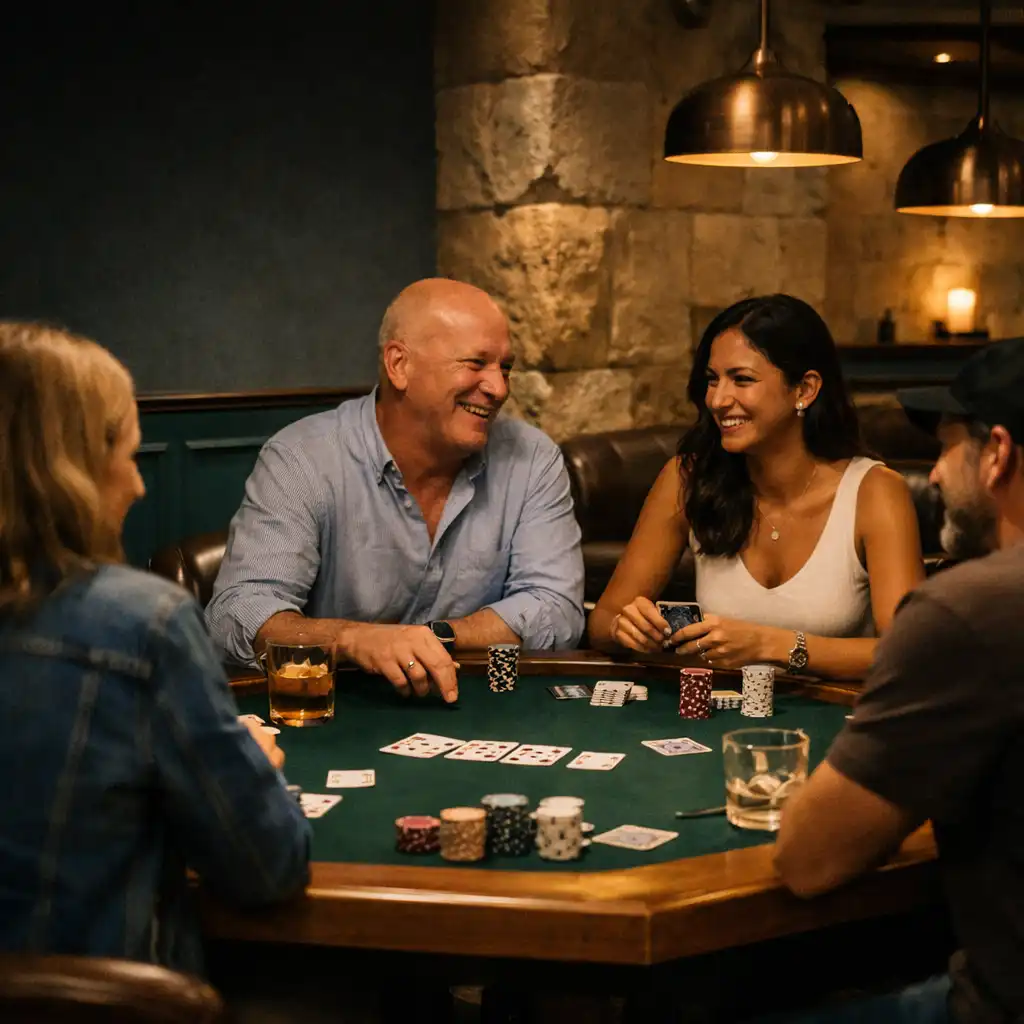
Guests gathered around a timber-edged felt poker table in Adrian Fąs card room

Poker Tables

Meet around the table

Adrian Fąs is a premium Australian restaurant and hospitality venue where authentic offline poker, real tables, cards and conversation bring an evening into focus.

Table layouts

The shape of the gathering

Our poker tables belong to the card lounge and dedicated card room, arranged for real conversation as much as play. Felt, chairs, hands and eye contact work together: a clear surface lets people see one another, settle comfortably and remain connected to the room rather than separated from it.

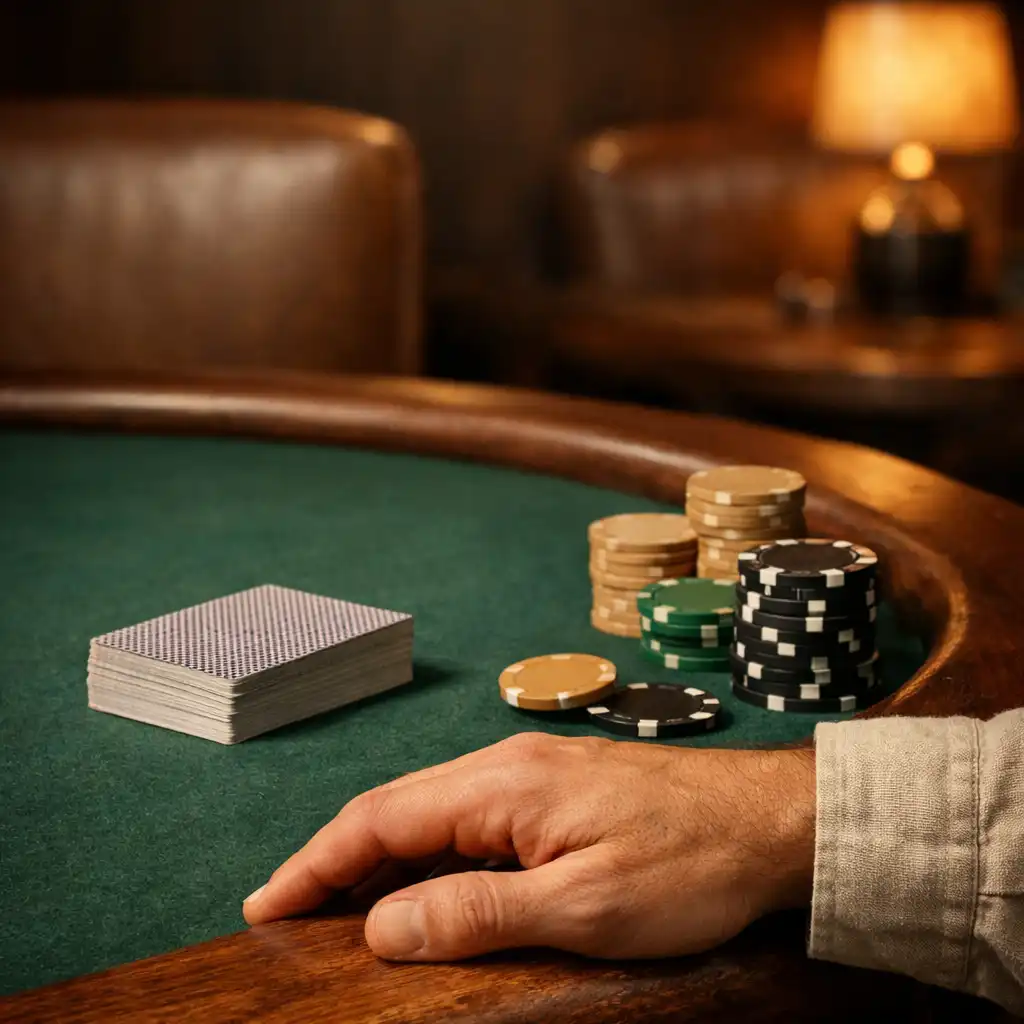
Close detail of green felt, timber table edge, physical cards, chips and a guest's hand
Felt, timber, cards and hands: the tangible centre of the table.

01

A close, shared layout

A rounded or oval setting suits a compact group that wants to stay in one conversation. Everyone has an inclusive line of sight across the felt, while cards and chips can move across a surface that feels shared rather than segmented. The table keeps small gestures visible and leaves room for the easy exchange of observation, humour and attention.

02

A longer gathering line

A longer table gives a group room to settle into its evening, with personal space at the edge and a clear central play area. It can hold the rhythm of shared plates, cocktails and conversation nearby without confusing the cards in front of everyone. The result is a generous line of seats that still reads as one social gathering.

03

A room with breathing space

The card room can feel intimate without becoming closed off. Thoughtful spacing, pools of light and the placement of chairs allow people to stay with the table while remaining aware of the lounge beyond it. That gentle transition gives the evening a calm pace: settled at the felt, then free to pause, speak and return.

Offline poker


What happens at an offline poker table?

Offline poker is simple in spirit: physical cards, a real table and people sharing the same room. Instead of a screen, there is felt beneath a deck, chips placed where everyone can see them, and the presence of people across the table. It is a tangible way to spend time together, shaped by attention, conversation and the small rituals of handling the game.

01

Arrival

Settle into the seat

Choose a seat, settle personal items and make a little room for cards and conversation. A chair, the table edge and a clear place for water or a drink help each guest arrive with ease. Taking a moment to notice the people around you makes the shared surface feel welcoming from the outset.

A calm seat makes room for the people and the table.

02

Visibility

Keep the play in view

Cards, chips and gestures are easier to follow when the surface remains readable for everyone. A physical deck invites shared attention: hands move, cards are handled and small signals are visible in real time. Keeping the centre clear is less about formality than mutual ease, so each person can follow the table without strain.

Decks and chips become visible cues in a face-to-face exchange.

03

Connection

Let the evening unfold

Conversation is part of the experience around a real table. There is room for a pause, a laugh, a shared plate or a cocktail, and for reconnecting with the wider restaurant as the evening moves on. Card play becomes one thread in a social night, held together by people choosing to be present together.

Cards, food, glasses and voices can all belong to one longer evening.

At the table

Built for cards, company and comfort

The playing surface

Felt gives cards, chips, hands and shared attention a calm visual centre. It softens the scene while keeping each object legible, inviting guests to notice what is on the table without losing the people around it. The surface is a place of physical contact and an even field for the evening’s conversation.

The edge and the seat

The timber edge and the chair establish a personal position around a shared table. A comfortable place to settle leaves room for posture, elbow space and a clear view across the felt. Guests can lean into conversation or sit back to observe, while still feeling connected to the same centre.

Cards, chips and small rituals

Physical decks, poker chips and small table accessories make the pace of play visible. They are shared cues: objects placed, picked up and noticed by the group. Their presence gives face-to-face card games a gentle material rhythm without turning the table into a lesson or a display.

Decks · chips · table accessories

Light over the table

Warm pools of light help faces, cards and the surface stay readable while preserving the quieter mood of an evening room. The effect is practical and atmospheric at once: enough clarity for the table, enough softness for conversation, and a composed card-room feeling within a sophisticated restaurant setting.

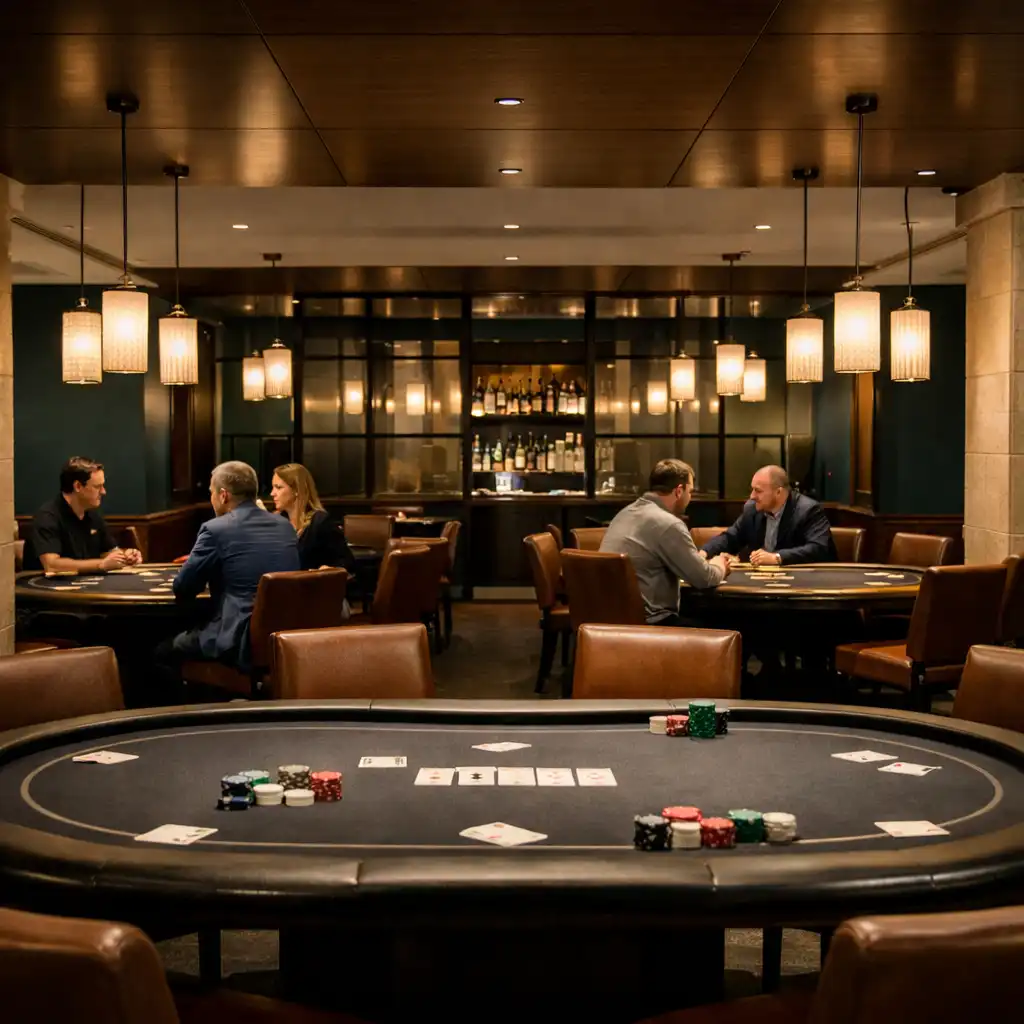
Adrian Fąs card room with poker tables, warm pendant lights and seated guests

Card room

The room around the table

The dedicated card room gives real poker tables a considered evening setting: architecture, timber, leather seating and warm light form a quieter focus within the venue. Guests can settle into seated conversation around physical card games, with the room offering a genuine sense of arrival rather than a generic games corner. It is a sophisticated restaurant setting made for people who value face-to-face time.


The lounge, nearby

The card lounge creates a social threshold before or after time at the table. It is a place for a drink, a conversation or a pause, keeping the evening connected to the card-room atmosphere without making the experience feel closed away from the rest of Adrian Fąs.


Dinner as part of the rhythm

Contemporary Australian dining, shared plates and cocktails give an evening more than one pace. Move naturally between restaurant conversation and cards, letting the table remain a point of return as friends gather, talk and spend time together.

Explore the Restaurant

Shared table

The social side of the table

Good table rhythm begins with consideration for the people in front of you. These small, practical gestures keep a face-to-face poker or social card evening open, warm and easy to share.

01
Welcome

Begin with the people around you

Arrive ready to share a table, notice who is already seated and let introductions become part of the experience. Reading the room and making space for a new participant helps everyone settle. It is a simple way to keep face-to-face play social from the first exchange of cards and conversation.

02
Space

Give the surface room

Keeping cards, chips, drinks and personal items considered helps preserve a calm, usable playing surface. A little clear space protects the shared view of the table and gives physical card play room to breathe. It is an act of attention to everyone seated nearby, not a formal rulebook.

03
Rhythm

Keep the rhythm generous

A good table leaves room for turns, observations, laughter and breaks to reconnect with the wider venue. Let conversation move at its own pace and allow people time to follow what is happening. The result is an evening shaped as much by company as the cards themselves.

Discover Offline Poker

Plan together

Choose the shape of your evening

Start from the reason you want to gather, then follow the part of Adrian Fąs experience that feels most like your night.

Friends

An evening with friends

Bring dinner, shared plates, cocktails and physical card games into one longer social evening. The table can be a point of return between conversations, allowing friends to move through the restaurant atmosphere without reducing the night to a single activity or a fixed arrangement.

Explore the Menu

Groups

A group around the table

For groups drawn to face-to-face poker, conversation and the atmosphere of the card lounge, Adrian Fąs offers a considered place to begin. If you are shaping a gathering around real poker tables and company, start a conversation with the venue about your group.

Contact Us

Cards

A night of cards and company

If offline poker or a social card evening is your first reason to visit, explore the broader experience before making plans. The Offline Poker and Events pages offer a useful next view of the card-led side of the venue and its place within a complete evening out.

Explore Events

Adrian Fąs

A table can hold more than one kind of evening

Plates, glasses, cards and voices can share the same horizon. At Adrian Fąs, contemporary Australian dining, cocktails, shared plates and offline poker meet in an evening designed around people being together.

Start with the restaurant

When food is your first reason to visit, explore the restaurant and menu as part of the whole venue story. Dining can set the tone for an evening that stays generous, social and open to whatever conversation follows.

View the Menu

Follow the cards

When physical card games and connection are your starting point, follow the card lounge and Offline Poker experience. It is an unforced invitation to discover real tables, tangible cards and time spent face to face.

Visit the Card Lounge

The next move

Plan a table-led evening

Adrian Fąs brings restaurant hospitality, authentic offline poker, a card lounge and real poker tables into one place for people meeting in person. Follow the conversation, gather your people and make the table part of an evening shaped by company.